
Groot's visual implementations were crucial to the success of Finna from day 1. He was able to capture and communicate the product vision rather well, and he helped us iterate through several versions of the app to build something people truly love to use. I'd recommend him any day!
Agbona Igwemoh
CEO, Finna HQ
OVERVIEW
Bridging the gap between crypto and everyday finance for mainstream users
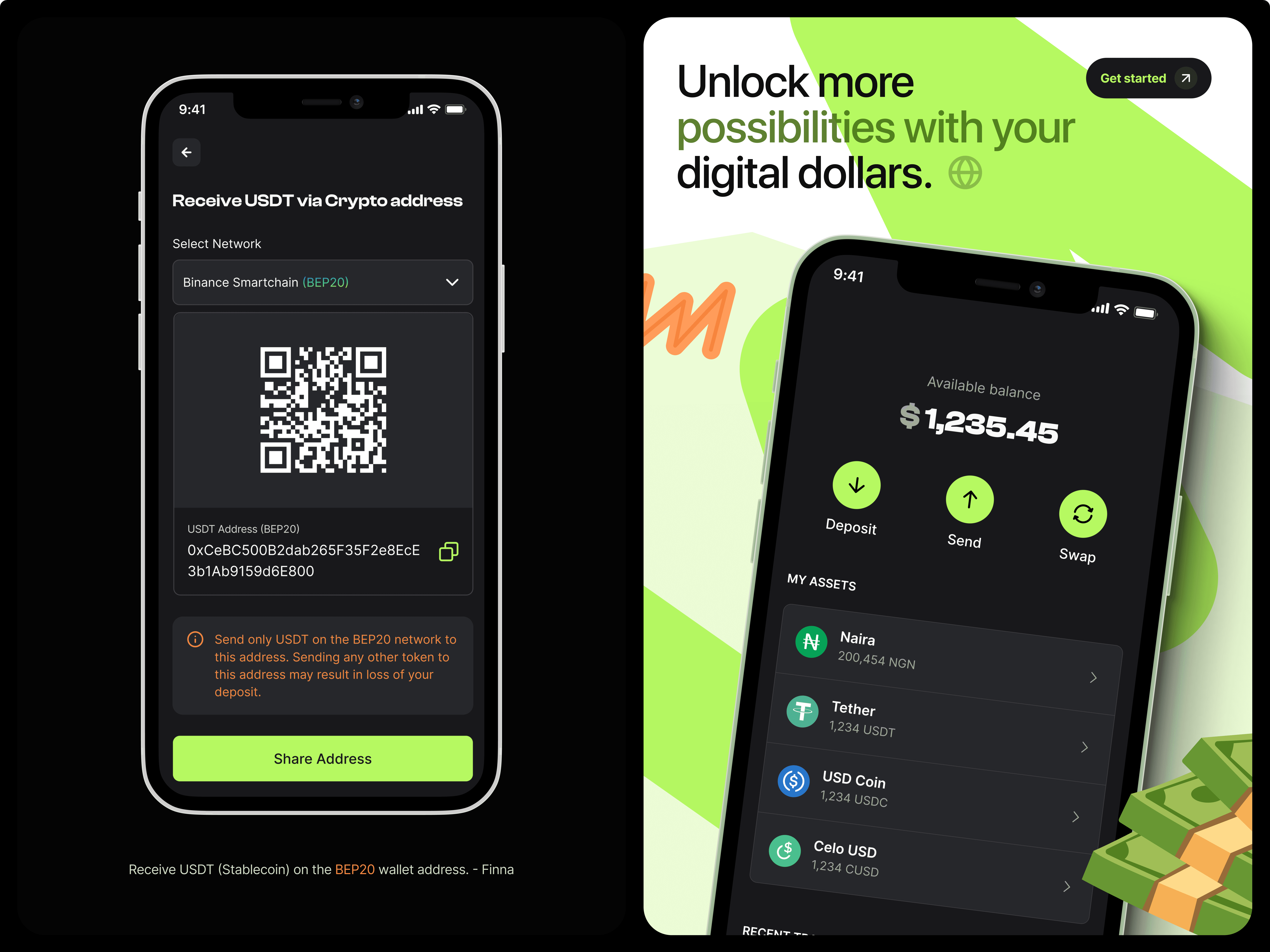
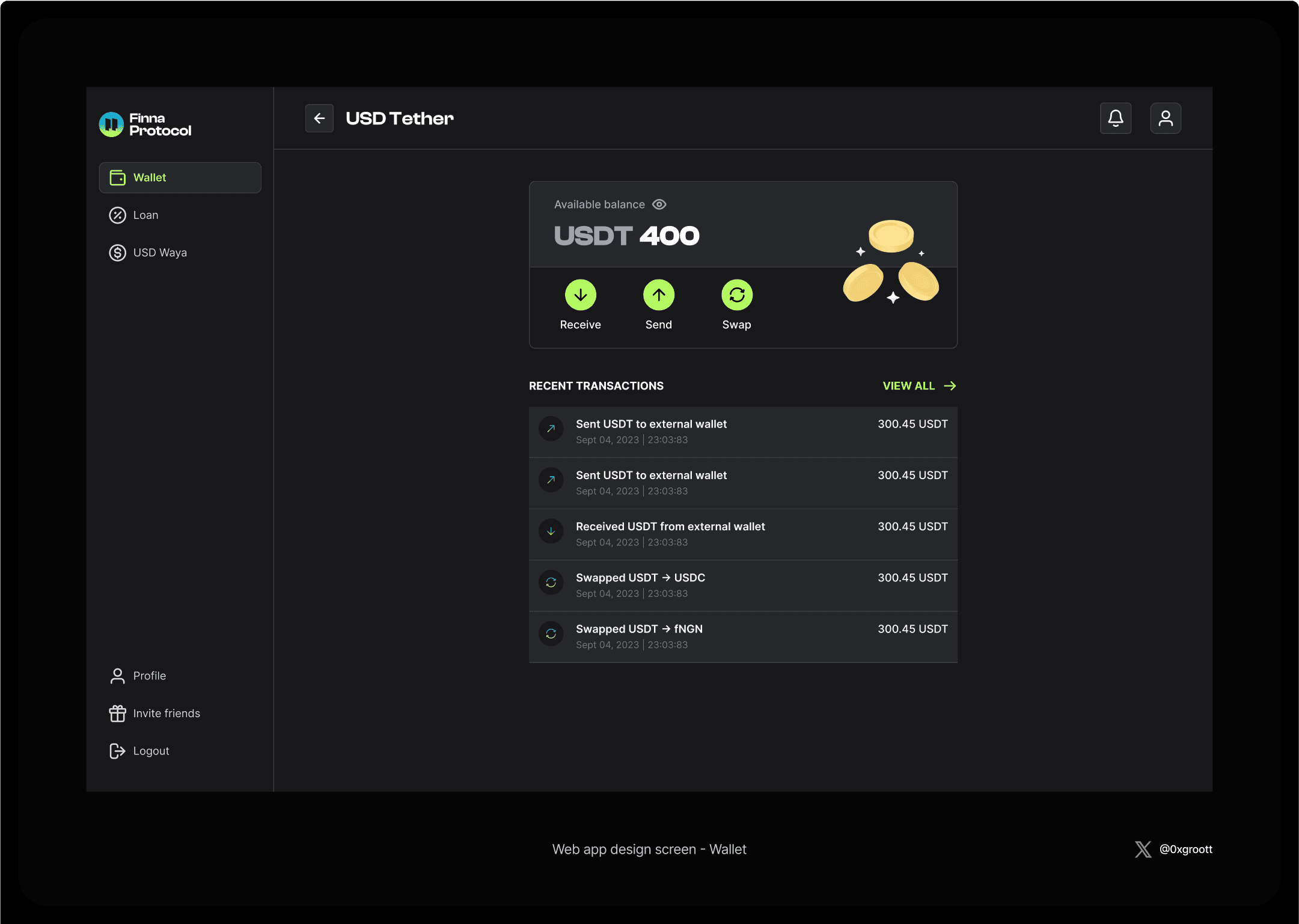
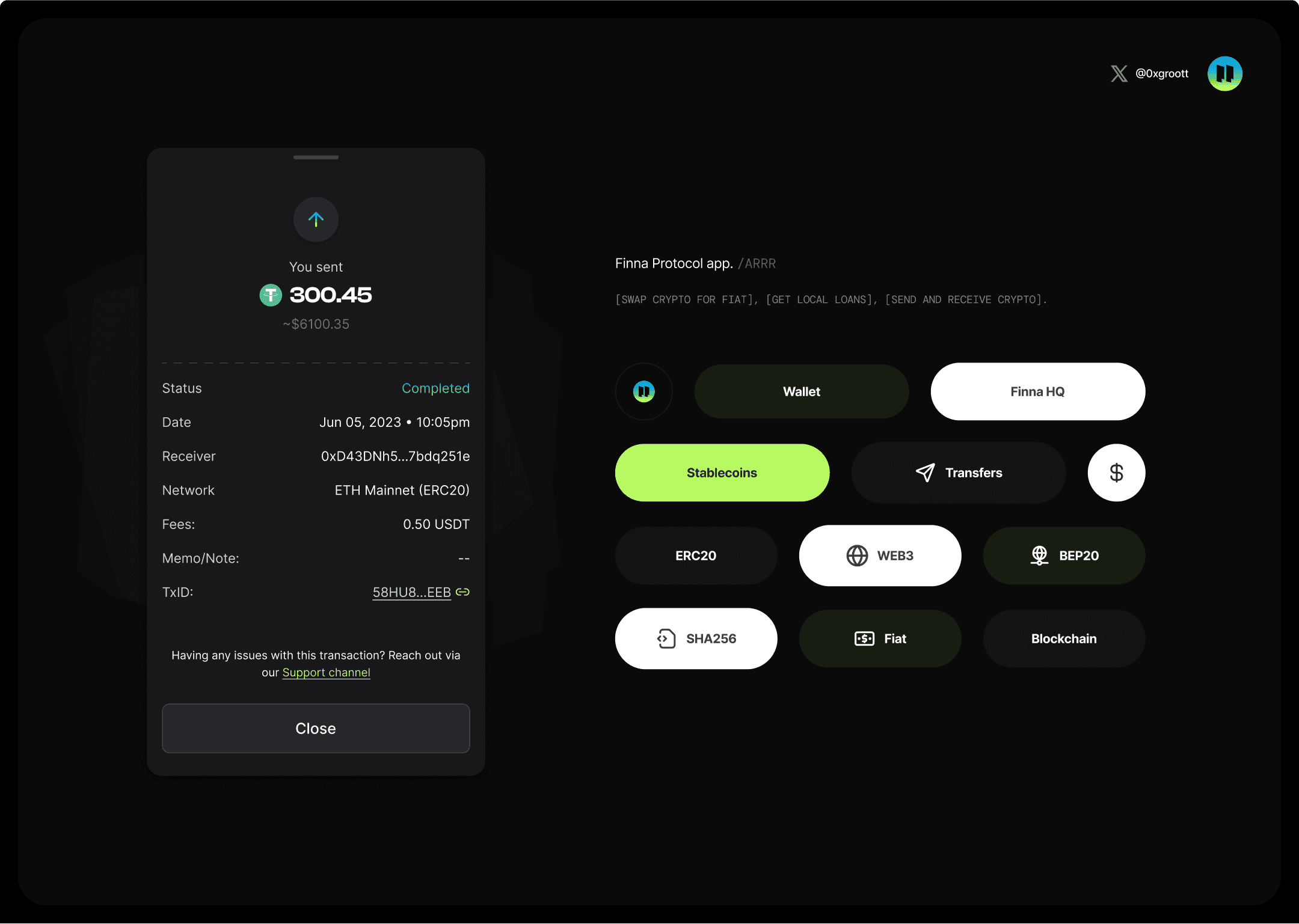
Finna Protocol is a comprehensive web3 wallet that bridges the gap between cryptocurrency and traditional finance. The platform enables users to send and receive Stablecoins, swap between crypto and fiat currencies, and withdraw directly to their bank accounts. It also offered virtual cards so that people can pay for stuff in local currency while shopping, directly using the Stablecoins in their wallet, all within a seamless experience across mobile and web platforms.
Key Features:
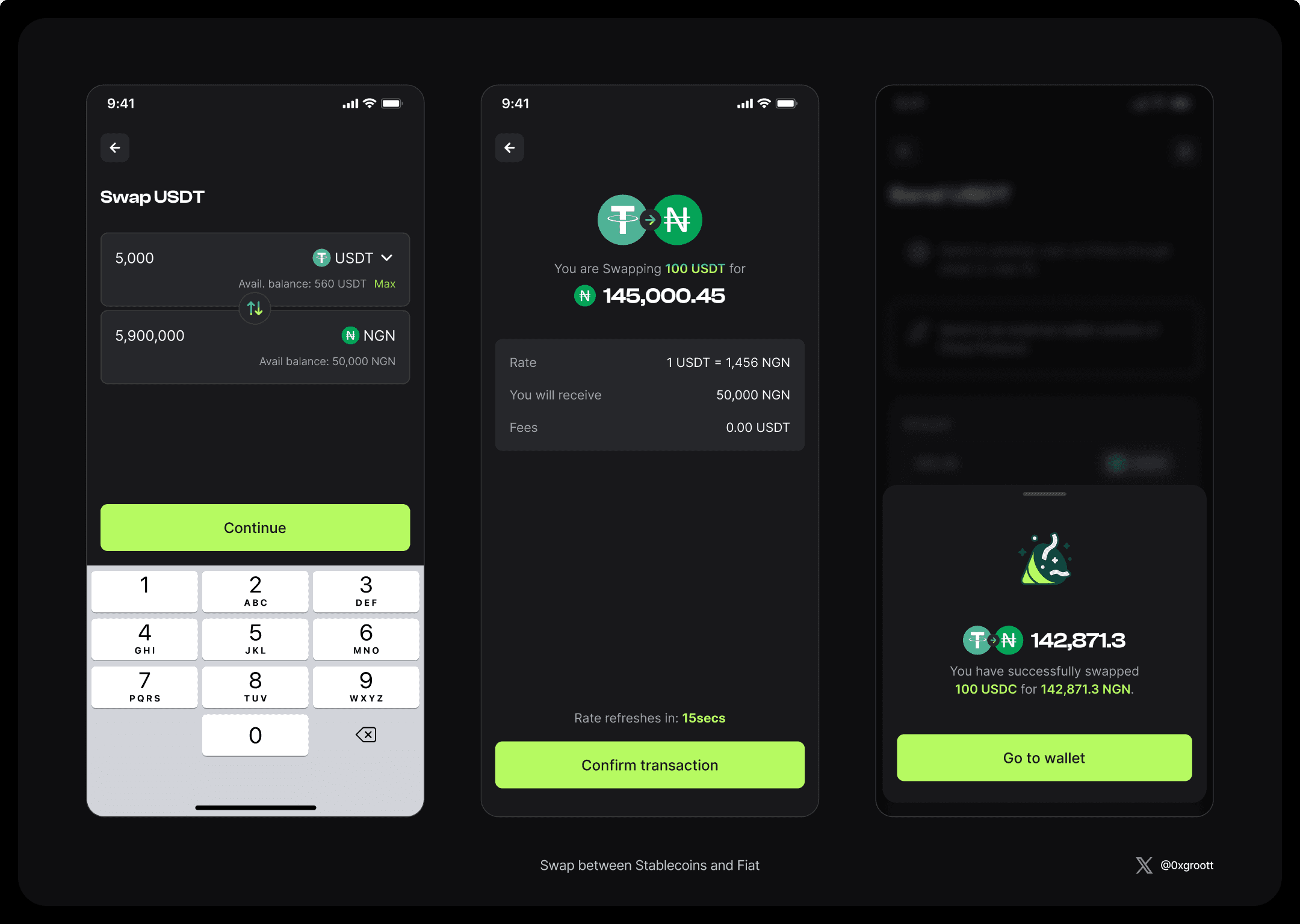
Fiat-Crypto Swaps: Seamless conversion between Stablecoins and fiat currency with direct bank account withdrawals.
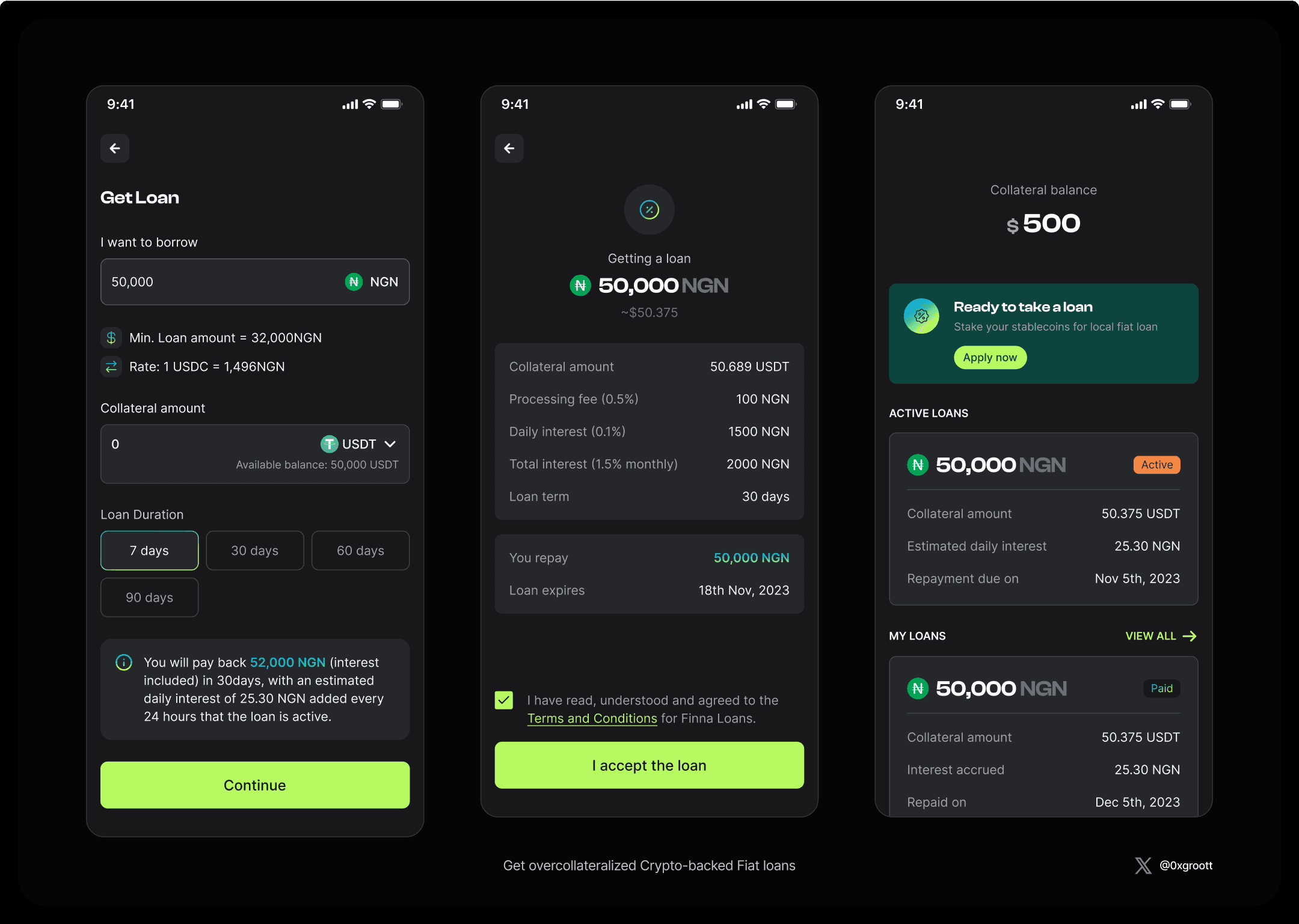
Overcollateralized Loans: Lock Stablecoins as collateral to access fiat loans (up to 90 days) with competitive rates—4% monthly on Finna versus 12% with local banks—and get your crypto back when you repay.
Virtual Cards: Users spend Stablecoins directly as cash at any shop or POS through integrated virtual cards, eliminating the friction between crypto and everyday purchases.
THE CHALLENGE
Accessing Fiat while holding crypto was unnecessarily complex to deal with.
For many crypto holders, accessing fiat is surprisingly difficult. In Nigeria, where currency depreciation drives people to hold stablecoins, getting cash quickly means navigating peer-to-peer platforms with unpredictable rates or using slow traditional lenders (both poor options when you don't want to liquidate assets). Crypto-backed loans offer an alternative, but they come with complexity and skepticism: users worry about unclear terms and losing their collateral. An unclear flow doesn't just cause drop-offs. It leads to confusion about repayment that can escalate into real financial consequences.
SOLUTION
The solution prioritized transparency and removed unnecessary friction.
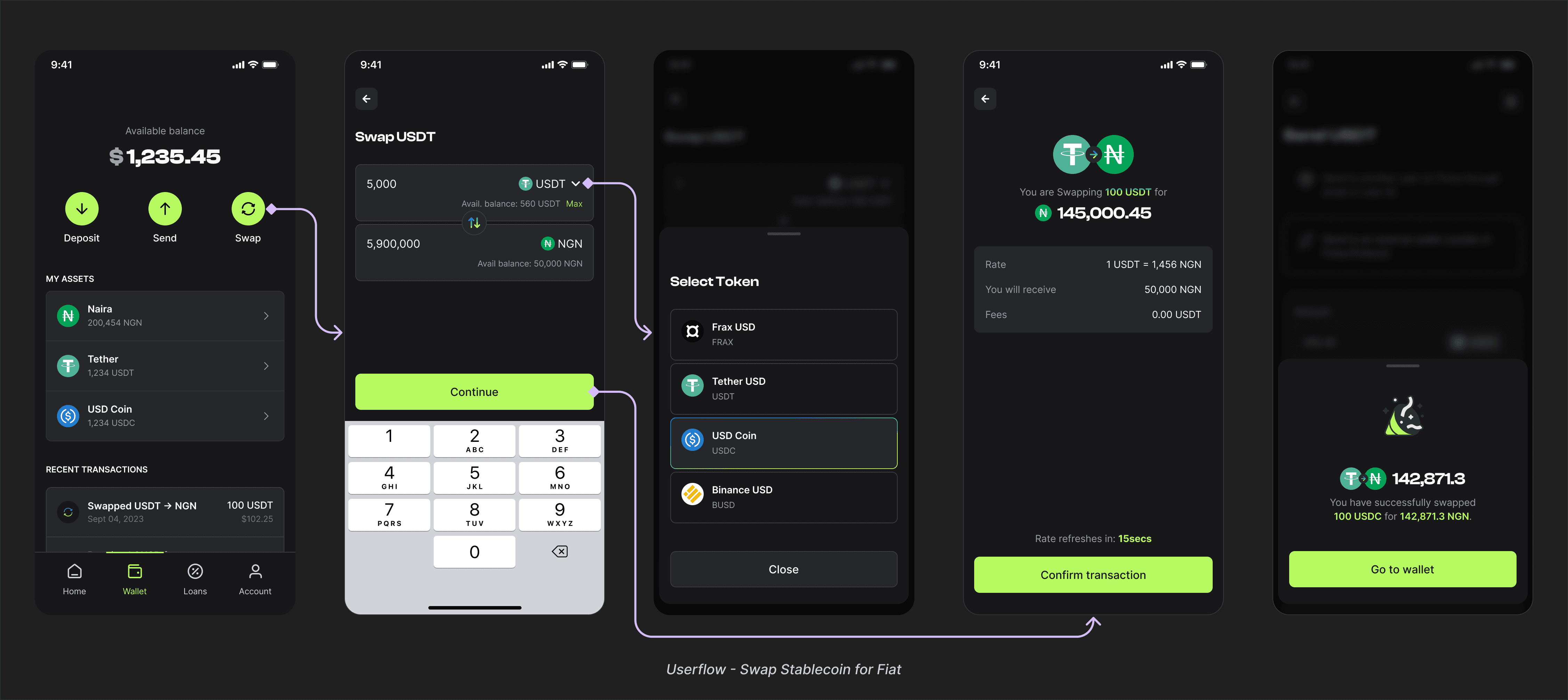
We made moving between crypto and fiat straightforward by surfacing what matters most: balances, rates, and costs upfront. For swaps, users see real-time rate countdowns and get notified if anything changes before they commit. For loans, we start with what they actually need (ie: the fiat amount), then show exactly what they'll owe and when. Both flows put critical details where users can see them, with PIN authorization for security. The result removes the guesswork and platform-hopping, giving users a transparent way to access liquidity whether they're experienced traders or just getting started.
IMPACT
Establishing the design foundation that shaped Finna's product identity
As founding designer and eventually design lead, I established the design direction and vision that shaped Finna's product identity. The design system and flows I created became the foundation for the team's continued growth and product development. The numbers are looking good:
As at November 2025:
We have over 25,000 registered users on the platform (as of Nov 2025).
An average monthly volume $30K USD (Not bad for a startup in Nigeria 🥳).
Won 2 grants [on Celo (Prezenti) and Avalanche Retro 9000] worth $500k in 2024.
We also got shortlisted as an official member to the Circle USDC grant program See announcement grant.
DESIGN APPROACH
Starting from zero - brand, system, and user experience built in parallel
Brand Foundation
As founding designer, I led the brand identity development from concept to execution, including color palette selection and logo conceptualization. The visual language needed to communicate trust and accessibility while standing out in the web3 space.
Design System Architecture
Built a comprehensive design system from the ground up to ensure consistency across the platform and enable scalability as the team grew from 1 to 2 designers.
Research-Driven Flows
For the loans feature, I conducted competitive analysis of traditional loan apps and fintech services, identifying recognizable patterns and adapting them to Finna's web3 context. This ensured users could leverage their existing mental models while exploring new financial primitives.
Regulatory Compliance Design
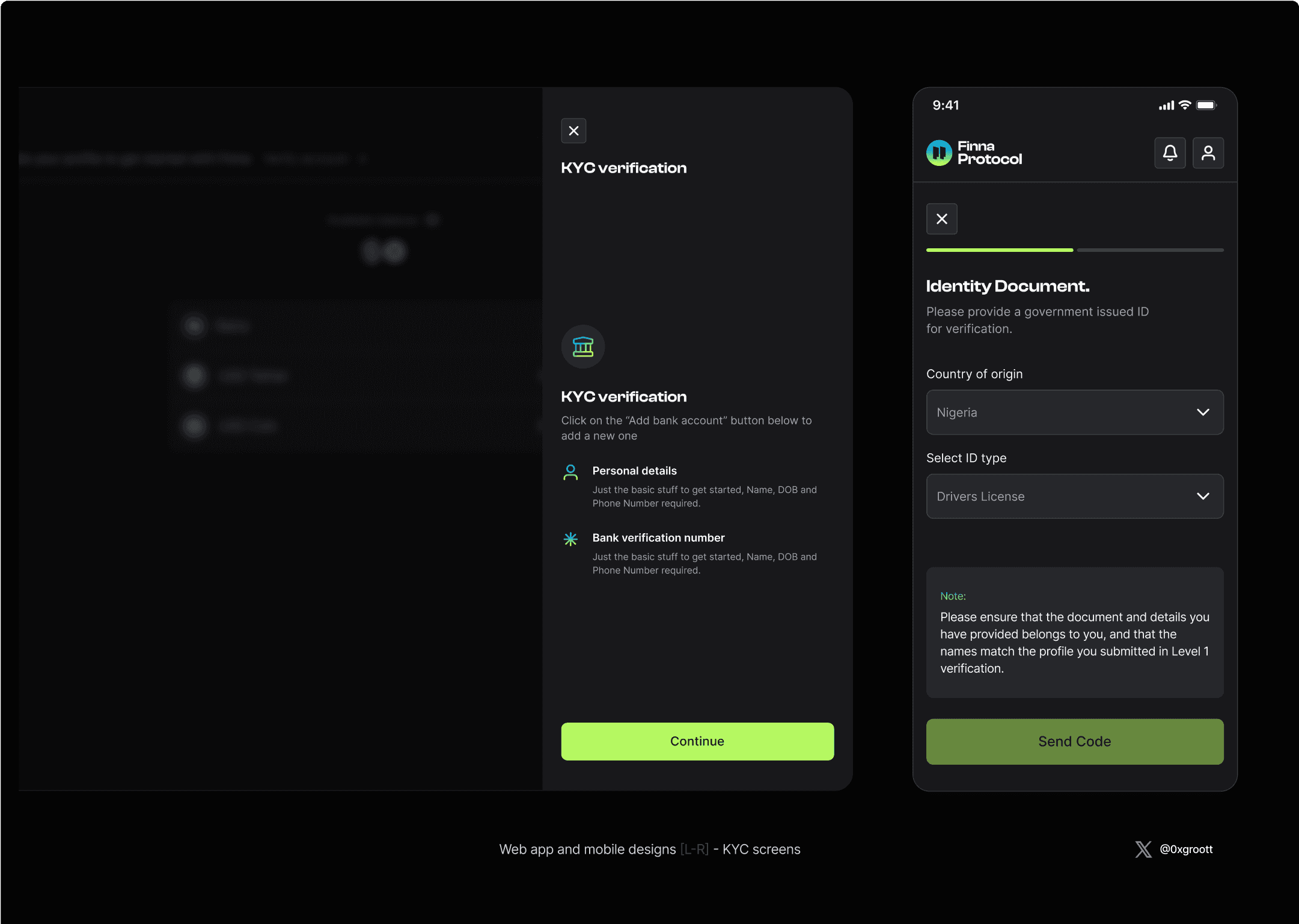
Designed the KYC and settings flows to meet Nigerian regulatory requirements while minimizing friction in the user journey. The challenge was making mandatory compliance feel like a natural part of the experience rather than a burden.
Intuitive Swap Mechanics
Created user flows for crypto-fiat swaps that simplified complex blockchain operations into familiar, easy-to-understand interactions.
KEY LESSONS LEARNED
What building a fintech product from scratch taught me about design, trust, and scale
Making Web3 Accessible
I learned that bridging crypto and traditional finance requires stripping away jargon and complexity. The key was designing familiar patterns that users already trusted from banking apps, then gradually introducing web3 concepts in context.
Building Trust Through Transparency
Complex financial operations can feel risky. I discovered that showing users exactly what's happening at each step (especially with loans and swaps) builds confidence. Clear visual feedback and plain language explanations turned anxiety into understanding.
Designing for Local Context
Working with Nigerian users taught me that one-size-fits-all doesn't work in fintech. I had to balance global web3 standards with local expectations, regulatory requirements, and payment behaviors. Cultural context shapes financial decisions.
Scaling Design Systems Early
Starting with a solid design system wasn't just optional but essential. I initially tried to wing it at first but we hit a lot of roadblocks. So we had to take a step back and reapproach our Product Thinking in a systematic way, rebuilding reusable components and patterns that could evolve as the product and team grew. This foundation saved countless hours as we expanded features.